Belt conveyors are a fundamental component of modern industrial processes. They play a pivotal role in transporting a wide range of materials efficiently and cost-effectively, making them indispensable in numerous industries. Belt conveyor manufacturers are continually innovating to meet the diverse needs of their customers, and understanding the various types of belt conveyors is essential for both manufacturers and users. In this comprehensive guide, we will explore the different types of belt conveyors, their applications, advantages, and key considerations for belt conveyor manufacturers.
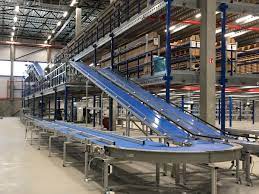
Defining a Belt Conveyor
A belt conveyor is a mechanical system used to transport materials or goods from one point to another within a defined path, typically in an industrial or manufacturing setting. It consists of a continuous loop of a flexible belt, typically made of rubber, plastic, or fabric, that is stretched between two or more pulleys. The pulleys are powered, causing the belt to move, which in turn carries the materials placed on it.
Belt conveyors are highly versatile and widely employed in various industries due to their efficiency, reliability, and ability to handle a wide range of materials, including bulk goods, packaged items, and even irregularly shaped or heavy objects. The Belt conveyor manufacturers in India can be configured in straight lines, curves, inclines, and declines, making them suitable for diverse applications.
Key advantages of belt conveyors include their cost-effectiveness, low maintenance requirements, and the ability to automate material handling processes, reducing manual labour and increasing efficiency. These conveyors are integral in manufacturing, warehousing, logistics, mining, agriculture, and many other industries, facilitating the seamless movement of materials, components, and finished products throughout the production and distribution processes.
Types of Belt Conveyors
Flat Belt Conveyors
Flat belt conveyors are the most common type and consist of a flat, continuous loop of fabric or rubber stretched between two pulleys. They are versatile and suitable for a wide range of applications, making them a popular choice among belt conveyor manufacturers.
Key features and applications include:
- Applications: Flat belt conveyors are used in industries such as manufacturing, warehousing, food processing, and packaging.
- Advantages: They are cost-effective, easy to install, and ideal for transporting flat, irregularly shaped, or small items.
Troughed Belt Conveyors
Troughed belt conveyors have idler rollers that form a trough shape to contain and guide materials. These conveyors are excellent for transporting bulk materials over long distances.
Key features and applications include:
- Applications: Troughed belt conveyors are commonly used in mining, aggregate, and agricultural industries for handling bulk materials like ores, grains, and aggregates.
- Advantages: They prevent material spillage, offer high capacity, and are suitable for inclines and declines.
Incline and Decline Belt Conveyors
Incline and decline belt conveyors are designed to move materials up or down slopes. They are often equipped with cleats or sidewalls to prevent material slippage.
Key features and applications include:
- Applications: These conveyors are used in industries where elevation changes are necessary, such as manufacturing, agriculture, and construction.
- Advantages: They maximize space utilization, reduce manual labour, and are customizable for specific incline/decline angles.
Modular Belt Conveyors
Modular belt conveyors consist of interlocking plastic or metal segments that form a continuous belt. They are known for their flexibility and adaptability to various conveyor layouts.
Key features and applications include:
- Applications: Modular belt conveyors are used in industries requiring sanitation, such as food processing, and for transporting heavy or irregularly shaped items.
- Advantages: They are easy to clean, offer excellent durability, and can be configured for complex conveyor systems.
Wire Mesh Belt Conveyors
Wire mesh belt conveyors feature an open, mesh-like design that allows air and liquids to pass through. They are ideal for processes requiring cooling, draining, or drying.
Key features and applications include:
- Applications: Wire mesh belt conveyors are used in industries like automotive, heat treatment, and electronics for processes that involve heat or liquids.
- Advantages: They allow for efficient airflow, drainage, and are easy to clean.
Cleated Belt Conveyors
Cleated belt conveyors have vertical or inclined cleats on the belt surface to hold materials in place during transport. These conveyors are excellent for steep inclines and moving loose materials.
Key features and applications include:
- Applications: Cleated belt conveyors are used in industries like agriculture (e.g., moving crops), recycling (e.g., sorting materials), and mining (e.g., transporting minerals).
- Advantages: They prevent material spillage, provide secure conveying on steep slopes, and can handle various materials.
Plastic Belt Conveyors
Plastic belt conveyors utilize a plastic or polymer belt, which is durable and resistant to chemicals and moisture. They are often used in harsh environments.
Key features and applications include:
- Applications: Plastic belt conveyors are common in the automotive, chemical, and pharmaceutical industries, where resistance to corrosive materials is essential.
- Advantages: They are easy to clean, resist corrosion, and offer high strength.
Pneumatic Belt Conveyors
Pneumatic belt conveyors use air pressure to move materials through a tube or enclosed system. They are suitable for delicate or abrasive materials.
Key features and applications include:
- Applications: Pneumatic belt conveyors are used in industries like cement, chemical, and agriculture for transporting powders, granules, and fragile materials.
- Advantages: They minimize material degradation, reduce dust emissions, and are ideal for long-distance transport.
Key Considerations for Belt Conveyor Manufacturers:
Material Handling Requirements: Manufacturers must consider the type, size, and weight of materials to be conveyed when designing conveyor systems.
Environment and Conditions: Conveyor systems may operate in harsh environments (e.g., extreme temperatures, and corrosive atmospheres), so selecting the appropriate materials and coatings is crucial.
Safety Standards: Compliance with safety regulations and standards is paramount. Conveyor manufacturers must incorporate safety features such as emergency stops and guards.
Maintenance and Durability: Conveyor systems should be designed for ease of maintenance and have components that can withstand the expected wear and tear.
Customization: Offering customized solutions to meet specific industry or application requirements can set manufacturers apart in a competitive market.
Automation Integration: As automation becomes more prevalent, conveyor systems should be designed to seamlessly integrate with other automated processes.
Energy Efficiency: Manufacturers should consider energy-efficient components and designs to reduce operational costs and environmental impact.
Conclusion:
Belt conveyor manufacturers play a crucial role in shaping various industries by providing efficient and reliable conveyor solutions. Understanding the diverse types of belt conveyors, their applications, and the key considerations for manufacturing is essential in delivering high-quality conveyor systems that meet the unique needs of customers. As industries continue to evolve, so will the innovation and adaptability of belt conveyor technology, ensuring their continued relevance and importance in modern manufacturing and material handling processes.
 The Backbone of Efficient Workflow